
After school, many children are not being oppositional or difficult.
They are dysregulated.
Throughout the day, their nervous systems have been working continuously to manage:
- Academic expectations
- Social relationships
- Noise and sensory input
- Transitions between tasks
- Performance pressure
- Emotional self-control
By the time they walk through the door at home, their stress response system may already be elevated.
What Is After-School Dysregulation?
After-school meltdowns are often a sign that a child’s nervous system has reached capacity.
When the body feels unsafe or overloaded, behaviour becomes reactive. This is not a character flaw. It is biology.
The nervous system responds to perceived stress automatically. Children cannot simply “choose” calm if their bodies do not feel safe.
Why Shared Activities Regulate the Nervous System
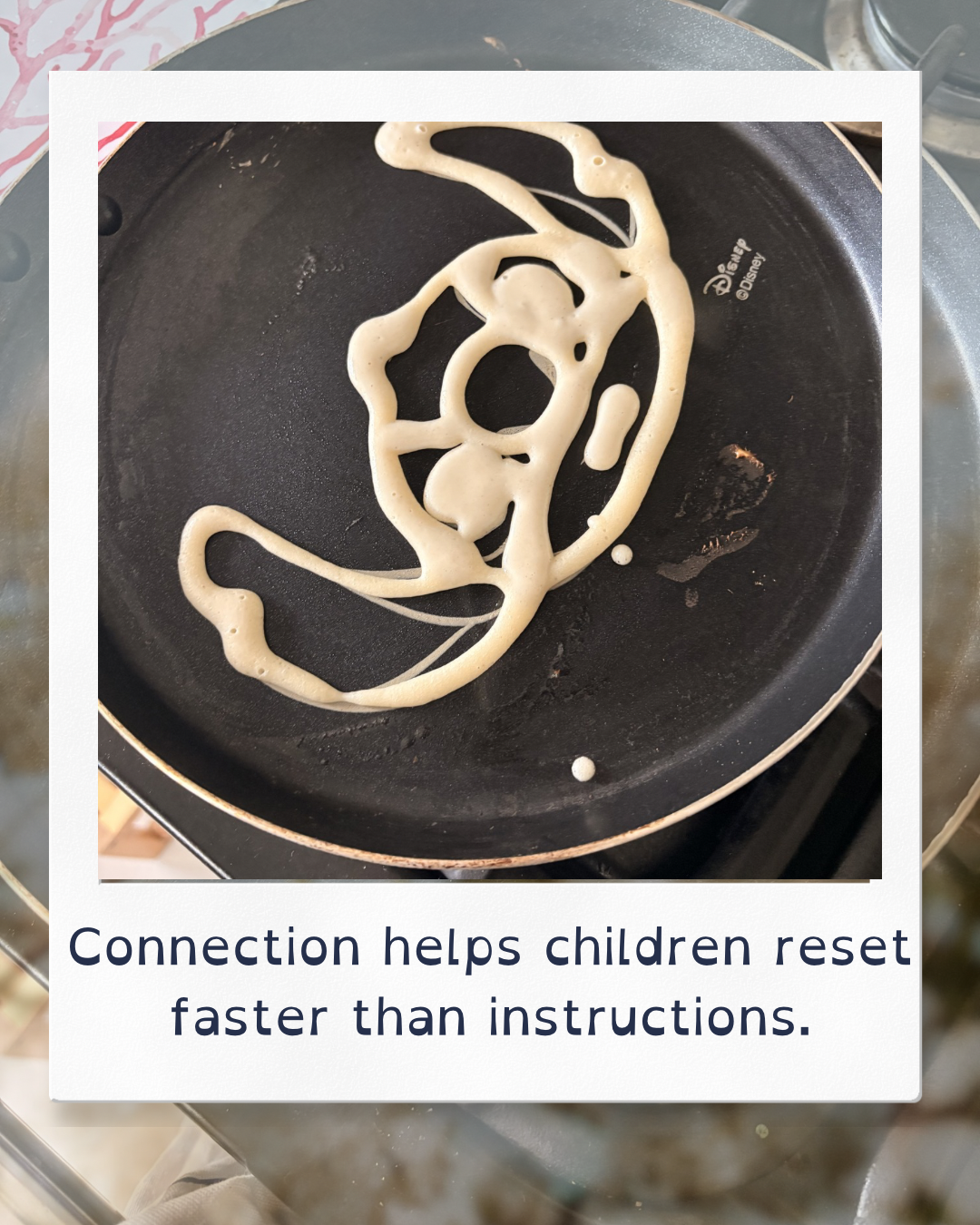
Yesterday, our after-school reset looked like making pancakes.
Mixing batter. Pouring slowly. Waiting for bubbles. Flipping carefully.
Repetitive movement combined with warm connection activates the parasympathetic nervous system, the part responsible for rest and regulation.
Side-by-side activities are particularly powerful because they reduce pressure. Children often regulate more easily when they are not required to make eye contact or explain their feelings immediately.
They simply experience safety.
Co-Regulation Before Self-Regulation
Children develop emotional regulation through repeated experiences of co-regulation.
When an adult remains calm, present and connected, the child’s nervous system gradually learns how to return to balance.
This is why small rituals matter.
- Baking together
- Walking the dog
- Drawing quietly
- Building Lego
- Sitting close at bedtime
These everyday moments are not distractions from emotional development.
They are emotional development.
Where Breathwork Fits In
While shared activities regulate naturally, intentional breathwork strengthens a child’s long-term ability to manage stress.
Breathing practices:
- Increase oxygen flow
- Reduce stress hormones
- Activate calming neural pathways
- Improve focus and emotional control
At Sarah Movassaghi Breathwork for Children CIC, we teach practical, science-informed breathwork tools that can be integrated into real family life, classrooms and healthcare settings.
Because regulation is not about perfection.
It is about consistent experiences of safety.
Sometimes that begins with something as simple as pancakes after school.
And that small reset can change the entire tone of the evening.
One breath at a time.
Leave a Reply