
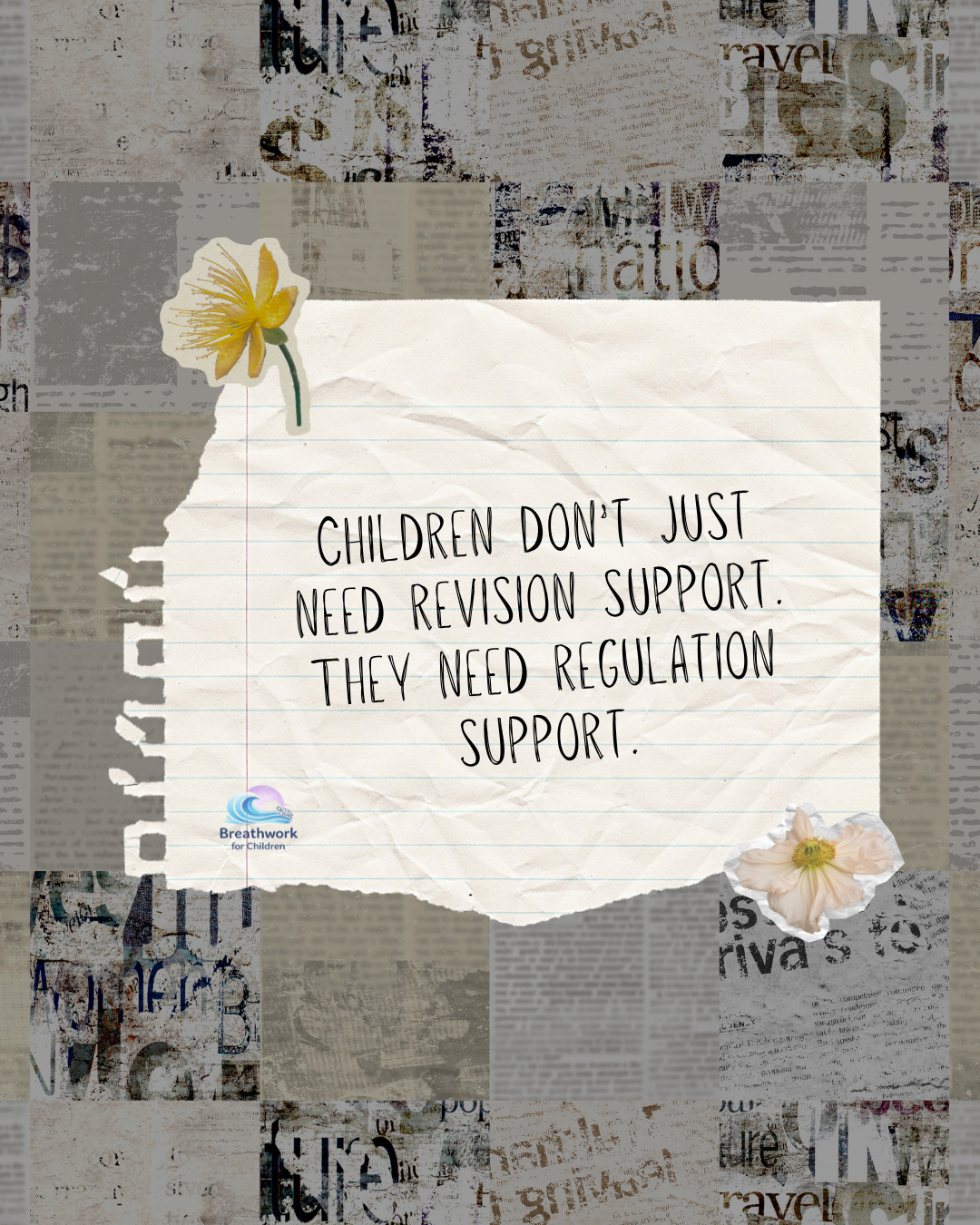
When a child goes blank in an exam, it’s often misunderstood.
It can look like a lack of preparation, focus, or confidence.
But from a nervous system perspective, something very different is happening.
When children feel pressure, their body begins to scan for safety. If the situation feels overwhelming, the nervous system can shift into a protective state , commonly known as fight, flight, freeze, fawn, or shutdown.
In this state, the brain prioritises survival over thinking.
This means:
• Memory recall becomes harder
• Processing slows down
• Access to learned information is reduced
So even when a child does know the answer, they may not be able to retrieve it.
This is why simply encouraging children to “try harder” or “stay calm” often doesn’t work.
The body needs support first.
Gentle breathing techniques can help signal safety back to the nervous system. In particular, extending the exhale (breathing out longer than breathing in) helps activate the parasympathetic response, the part of the nervous system responsible for rest, calm, and regulation.
A simple practice:
Inhale through the nose for 4
Exhale slowly for 6
Repeat for a few breaths
This small shift can help reduce panic and bring the thinking brain back online.
Over time, when children are given simple, consistent tools like this, they begin to build confidence not just in exams but in how they respond to pressure more broadly.
This is where supportive tools, like breathwork cards, can be helpful. They provide children with accessible, repeatable strategies they can use independently, both in the lead-up to exams and in the moment itself.
Because success in exams isn’t just about knowledge.
It’s about feeling safe enough to access it.
Leave a Reply